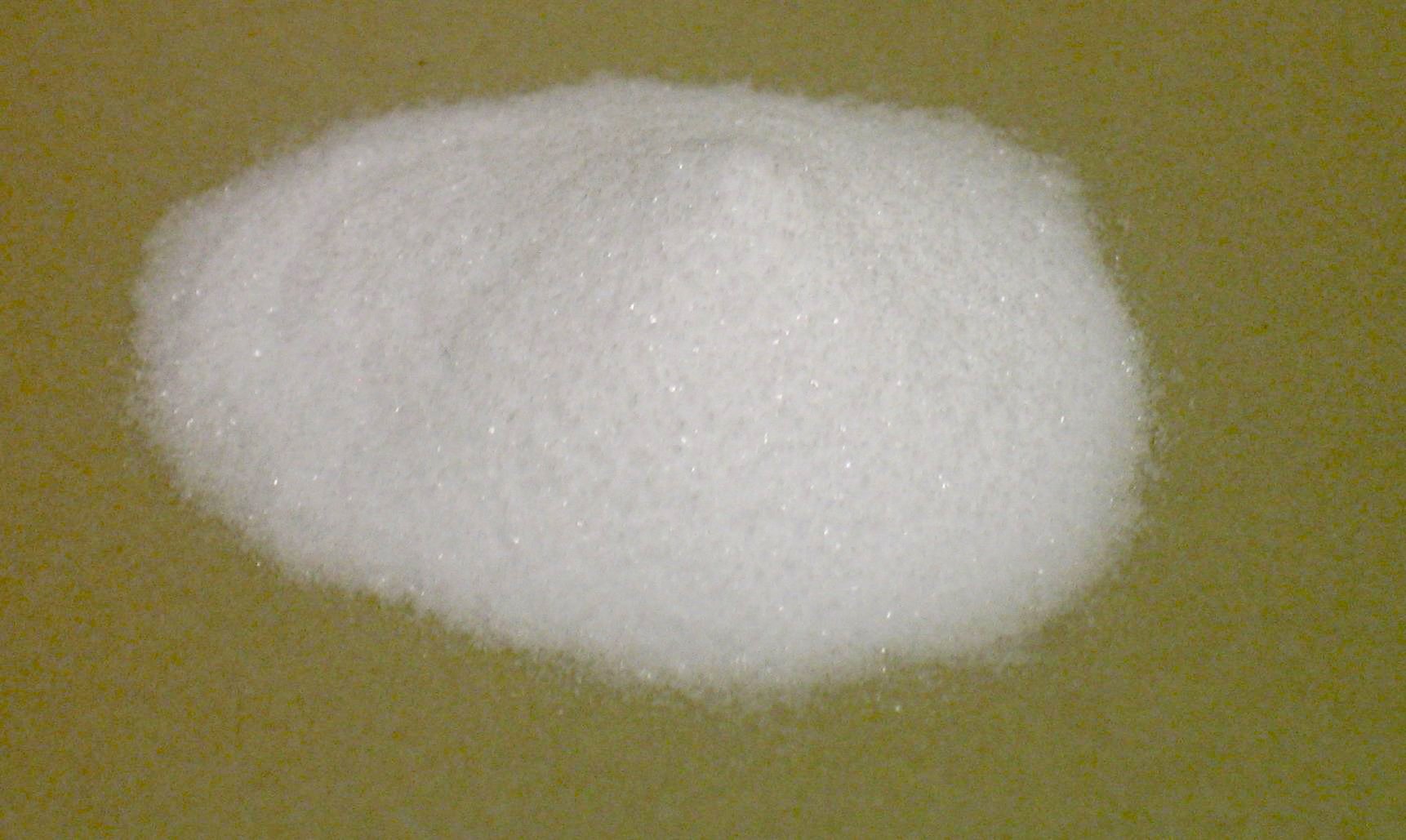
Sodium bicarbonate (baking soda) is one of the oldest and most widely used biodegradable cleaning agents.
What "Biodegradable" Actually Means for Cleaning Products
The term biodegradable, when applied to cleaning ingredients, refers to a compound's capacity to be broken down by microorganisms in the environment — typically bacteria and fungi — into simpler substances such as water, carbon dioxide, and mineral salts. The rate and completeness of this process determine whether a compound is classed as "readily biodegradable," "inherently biodegradable," or persistent.
Under EU Regulation (EC) No 648/2004 on detergents, all surfactants used in consumer cleaning products sold in the EU must demonstrate aerobic biodegradability above 60% within 28 days — this is the OECD 301 test series standard. Products that fail this threshold cannot be legally marketed across EU member states, including the Czech Republic.
The regulation does not cover every ingredient in a cleaning formulation — only the surfactant fraction. Preservatives, fragrances, and colourants are regulated separately under different frameworks, and their biodegradability is not always subject to mandatory disclosure.
Sodium Bicarbonate: The Workhorse Compound
Sodium bicarbonate (NaHCO₃), commonly called baking soda, is one of the most versatile and well-studied eco cleaning ingredients. Its pH of approximately 8.3 in aqueous solution makes it a mild alkaline agent — strong enough to dissolve grease and neutralise acidic odour compounds, but insufficient to cause skin corrosion at normal use concentrations.
As an abrasive, its Mohs hardness of 2.5 means it removes light deposits from porcelain, enamel, and stainless steel without scratching. It is ineffective on calcite-based limescale, for which acidic agents are needed.
Toxicologically, sodium bicarbonate is classified as non-hazardous under the GHS system. It is rated as readily biodegradable and presents negligible ecotoxicity. The European Food Safety Authority (EFSA) approves it as a food additive (E500), which reflects its high safety margin.
Citric Acid: The Standard Descaler
Citric acid (C₆H₈O₇) is produced industrially through fermentation of carbohydrate sources, most commonly corn-derived glucose. It appears in cleaning products as a descaler and pH adjuster, functioning by chelating calcium and magnesium ions in limescale deposits — converting them into soluble citrate salts that rinse away cleanly.
OECD 301B biodegradability tests classify citric acid as readily biodegradable. Its aquatic toxicity (LC50 for Daphnia magna) exceeds 100 mg/L, placing it in the lowest hazard category for freshwater organisms. It is listed on the EU's Ecolabel ingredient positive list.
Practical limitations: citric acid should not be used on natural stone surfaces (marble, travertine, limestone) because it etches the calcium carbonate matrix. It performs well on stainless steel, chrome, ceramic tiles, and kettles, at concentrations typically between 5–15%.

Citric acid crystals, produced by Aspergillus niger fermentation of sugar substrates. Readily soluble and fully biodegradable.
Acetic Acid: Vinegar in Cleaning Context
White distilled vinegar used in cleaning contexts is typically a 5–8% acetic acid (CH₃COOH) solution. At these concentrations, it dissolves carbonate-based deposits (limescale, mineral staining), and its antimicrobial action against common household pathogens has been documented at undiluted concentrations by several independent studies, including research cited by the European Chemicals Agency (ECHA).
Acetic acid is readily biodegradable — it degrades through standard aerobic biological pathways within days. Its strong odour dissipates rapidly on drying. Not suitable for use on natural stone, unfinished iron, or aluminium, where it causes chemical reactions.
Plant-Based Surfactants (Alkyl Polyglucosides)
Alkyl polyglucosides (APGs) are non-ionic surfactants derived from glucose (from corn or wheat starch) and fatty alcohols (from coconut or palm kernel oil). They reduce water surface tension, enabling the emulsification and removal of oily deposits — the core function of any cleaning surfactant.
Compared to petrochemical surfactants such as sodium lauryl sulphate (SLS) or linear alkylbenzene sulphonate (LAS), APGs show significantly lower aquatic toxicity and higher biodegradation rates. The OECD 301B test places APGs in the readily biodegradable category. They do not bioaccumulate and show low irritation potential on human skin at standard concentrations.
Czech eco-labelled dish soaps and all-purpose cleaners from brands certified under the EU Ecolabel or Nordic Swan Ecolabel will typically list APGs (sometimes labelled as "glucoside" or "coco glucoside") as their primary surfactant.
Hydrogen Peroxide as a Disinfectant
A 3% aqueous hydrogen peroxide (H₂O₂) solution is widely used as a mould treatment and surface disinfectant in eco cleaning routines. Its active mechanism is oxidative — it generates reactive oxygen species that disrupt bacterial cell membranes and denature fungal proteins. After the reaction, it decomposes entirely into water and oxygen, leaving no residue.
At 3% concentration, hydrogen peroxide is classified as non-toxic for skin contact (brief exposure) and presents minimal environmental risk. It should not be combined with vinegar, as the combined peracetic acid formed is more corrosive than either alone. Effective on grout, bathroom tiles, and food-contact surfaces when applied at full 3% concentration and allowed a 10-minute contact time before rinsing.
Essential Oils: Functional Additives, Not Marketing Decoration
Tea tree oil (Melaleuca alternifolia) and lavender essential oil both contain terpene compounds with documented antimicrobial activity. Tea tree oil's active constituent, terpinen-4-ol, has been shown in peer-reviewed studies to disrupt the cell membranes of Staphylococcus aureus, E. coli, and Candida albicans at concentrations of 0.5–2%.
The ecological profile of terpenes is mixed. They are partially biodegradable and show moderate aquatic toxicity at higher concentrations. Their use in drain-bound cleaning products warrants caution in areas with direct waterway drainage. The European Environment Agency recommends limiting essential oil concentrations in rinse-off products to below 1%.
Reading an Eco Product Label
Czech legislation requires INCI (International Nomenclature of Cosmetic Ingredients) labelling on personal care products, but cleaning product labelling is governed by the EU Detergents Regulation. Under Article 11 of that regulation, all ingredients must be listed by trade or INCI name on the manufacturer's website (with concentrations above 0.2% disclosed on request to poison centres).
When evaluating a product's eco credentials:
- Look for the EU Ecolabel flower or Czech Ekologicky šetrný výrobek (Environmentally Friendly Product) mark.
- Check whether surfactants are identified by common name (e.g., "coco glucoside") rather than generic "surfactants."
- Verify the absence of optical brighteners, phosphates, and EDTA — all of which persist in aquatic environments.
- Preservatives to avoid: methylisothiazolinone (MI) and benzisothiazolinone (BIT) are aquatic toxicants; sodium benzoate and potassium sorbate are more ecologically acceptable alternatives.
Related: Non-Toxic Floor and Surface Cleaners — A Practical Overview
Related: Where to Source Eco Cleaning Products in Czech Republic
Last updated: May 2026